Saturday, January 15, 2011

Facebook page

Please feel free to contact me through my blog or on my facebook page:
http://www.facebook.com/#!/pages/Singing-Nettles-Herbal-Medicine-Clinic/186949351782


Creative Commons License
Singing Nettles Herbal Clinic by Amanda Dainow is licensed under a Creative Commons Attribution-NonCommercial-NoDerivs 3.0 Unported License.
Based on a work at singingnettles.blogspot.com.
Permissions beyond the scope of this license may be available at http://singingnettles.blogspot.com/.

©ALL TEXT AND IMAGES COPYRIGHT

Wildcraft! An Herbal Adventure Game

The holiday gift I most wanted was Wildcraft! An Herbal Adventure Game. It is a beautiful and educational board game for players of all ages, which teaches players about using wild plants (i.e. many weeds) to help in first aid situations in the woods. It encourages cooperation and group learning. I found some of their herb choices interesting, as I had not heard of the uses for these plants that the game listed.

The object of the game is to climb to the top of the mountain, pick several pailfuls of huckleberries, and return to gramma's before dark. There are trouble spots where you encounter accidents such as wasp stings, or uncomfortable human symptoms, such as hunger. Players can pull cooperation cards to help others in need. Each player acquires plant cards, which can be used to match the appropriate plant to the situation. It is really fun! The plant cards and the board are beautiful, and it comes with a chart listing the medicinal plants and their applications.

Tamarind

Tamarind candy with chille


Tamarindus indica
from the family leguminosae

  • TASTE sour, sweet
  • ENERGY heating
  • POST-DIGESTIVE EFFECT sour 
  • EFFECT ON DOSHAS* decreases vata, kapha; increases pitta
  • ACTIONS stimulant, carminative, laxative
*Doshas are the elemental components of each individual's constitution, or prakruti, which are created at conception and are unchangeable. They are vata (air, ether), kapha (water in an earth vessel) and pitta (fire).

An excellent reference is "The Yoga Of Herbs: An Ayurvedic Guide to Herbal Medicine", by Dr. David Frawley and Dr. Vasant Lad. He runs the Ayurvedic Institute.


Creative Commons License
Singing Nettles Herbal Clinic by Amanda Dainow is licensed under a Creative Commons Attribution-NonCommercial-NoDerivs 3.0 Unported License.
Based on a work at singingnettles.blogspot.com.
Permissions beyond the scope of this license may be available at http://singingnettles.blogspot.com/.

©ALL TEXT AND IMAGES COPYRIGHT

Tuesday, January 11, 2011

Tales from the Medicine Trail

This week, I read "Tales from the Medicine Trail: Tracking down the health secrets of shamans, herbalists, mystics, yogis, and other healers". It is a wild adventure narrative (true story) of a medicinal plant hunter's trips through the Amazon, India and other exotic locales.

Of particular interest to me was the description of various Ayurvedic clinics in India. Ayurveda is the oldest medical system in the world, over 5000 years old. All medical systems since have their foundations in Ayurveda. I have taken several courses in Ayurveda. You can determine your own prakruti (elemental constitution) by taking a quiz-they are online as well. This book explains how Ashwagandha, or Withania Withania somnifera is the universal Ayurvedic tonic. It is one of my favourite herbs, as an adaptogen for stress and regulating sleep cycles. It can be used in any formula, for any purpose, with no reported side effects.

Withania


The root is in remedies for coughs, rheumatism, gynecological disorders, fatigue, emaciation, low libido, impotence, inflammatory conditions, ulcers, sore eyes and diminished brain function. It is regarded as the most effective nerve tonic among all Ayurvedic herbs, and it is used widely against stress. Studies in India demonstrate the it alleviates anxiety. In the Ayurvedic texts, it is the herb that can be used with some good effects in all cases.

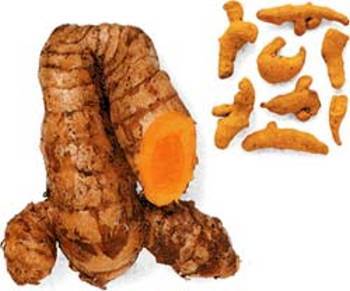
Turmeric root


The aromatic herbs and spices in an Indian masala, or curry, are medicine. Curcumin extracted from turmeric root can be ground and cooked in hot oil to make a curry, along with garlic, hot chillies, cardamom, cumin, cinnammon, black pepper, clove, and any other spices you like. Curcumin can be used to treat rheumatoid arthritis, it is anti-inflammatory.  It can also be used to treat respiratory disease. It is cardioprotective, reduces itching and pain from external cancerous lesions and speeds healing of infected and noninfected wounds.  Curcumin also supresses the growth of pathogenic, food-borne bacteria, which is probably why it is used in cultures where there is no refrigeration. It is also hepatoprotective (liver protective) against potent toxins.

Cat's claw


The book also mentions una de gato, cat's claw Uncaria tomentosa, of which I made a tincture. It is anti-inflammatory, contraceptive, cytostatic (slows the growth of tumors), immune stimulant and antiviral. It contains antioxidant polyphenols and is anti-mutagenic.

Kava


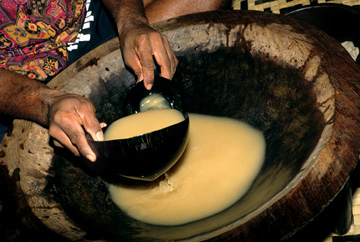
Kava Piper methysticum has no side effects, relieves stress, anxiety, and restores sleep. It is a traditional indigenous plant used as a social, mood-enhancing beverage. It is used for a wide range of conditions. The main use is for urogenital inflammation and cystitis. It is also drunk to relieve headaches, to restore strength, to promote urination, to soothe an upset stomach, to relieve whooping cough in children, and to decrease symptoms of asthma and tuberculosis. Applied topically, it treats fungal infections and soothes stings and skin inflammations. It is also valued for its ornamental and spiritual significance. It is central to the rituals and several life passages of the people of Oceania. The plants are exchanged and used at all significant occasions and ceremonies. The plants are often cultivated to grow in specific shapes, and presented as gifts at weddings and other special occasions, decorated. In Hawaii, cultivated kava is called awa.

These plants have been used safely for millenia, but I still stress using local, or at least Canadian herbs as a first choice, when possible, because it is more ecologically responsible. There is also a belief that the herbs growing in our environment are indicators of our health needs. Whatever we need may be in our backyard. They are also simpatico, being influenced by the same environmental influences as ourselves, they are more easily taken up and assimilated in our bodies. 

The traditional kava drink


Creative Commons License
Singing Nettles Herbal Clinic by Amanda Dainow is licensed under a Creative Commons Attribution-NonCommercial-NoDerivs 3.0 Unported License.
Based on a work at singingnettles.blogspot.com.
Permissions beyond the scope of this license may be available at http://singingnettles.blogspot.com/.

©ALL TEXT AND IMAGES COPYRIGHT


Tuesday, January 4, 2011

Holly and Ivy

The holly and the ivy
when they are both full grown
of all the trees that are in the wood
the holly bears the crown

Holly
Holly leaves used to be used as a diaphoretic (induces sweating to reduce fever) and an infusion (medicinal tea) of them was given in catarrh (mucous), pleurisy and smallpox. They have also been applied in intermittent fevers and rheumatism for their febrifugal (fever reducing) and tonic properties, and as a powder, or taken in infusion or decoction, have been used successfully where Cinchona has failed. This action is believed to be caused by a bitter alkaloid named Ilicin. The juice of the fresh leaves has been applied in cases of jaundice.

The berries have totally different qualities than the leaves, being violently emetic and purgative. A small number have caused excessive vomiting soon after they are swallowed, though thrushes and blackbirds eat them. They have been used medicinally for dropsy; and, as a powder, as an astringent to stop bleeding.
Culpepper says 'the bark and leaves are good used as fomentations for broken bones and such members as are out of joint.' He believed the berries cure colic.

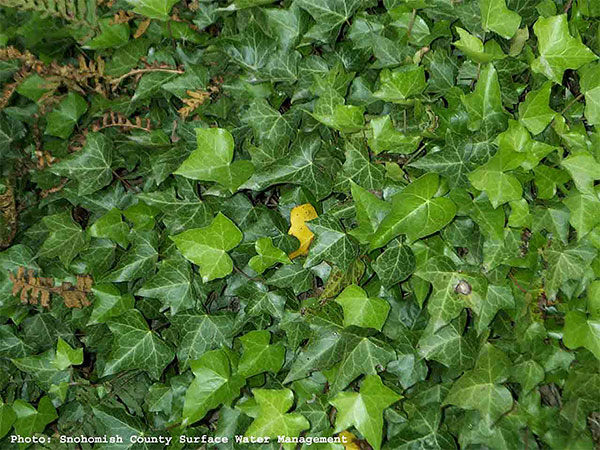
Ivy

Ivy has historically been used in the treatment of paralysis, acute rheumatism and articular stiffness, and in various forms of chronic and obstinate eruptive diseases. It used to be listed in the United States Pharmacopeia. It is used frequently by homoeopaths for rheumatism, ringworm and other skin disorders, and is considered by them to be one of the most useful remedies in most cases of Nettlerash, especially if caused by someone's particular constitution, where the eruption is caused by a particular food.

The fluid extract, prepared from the fresh leaves, is mostly given in the form of a tincture, in doses of 5 to 30 drops. In small doses it is an excellent sedative to the nervous system, but it must be given with care, as internally it may cause gastric intestinal irritation, drowsiness, stupor and delirium.

It has been used in cases of urinary incontinence. For this, the bark of the root of R. aromatica is also used very successfully. An infusion of 1 OZ. to a pint of boiling water is taken in wineglassful doses.

The fluid extract of R. Toxicodendron can be used as a vesicant or blister producer, like cantharides, mezeron, and oil of Mustard.

The best preparation is a concentrated alcoholic tincture made from the green plant at a strength of 1 in 4, with 25% alcohol. The dose is 1 to 5 drops three times a day. A solid extract is not used due to the extreme volatility of the active principles of the crude drug.

Its milky juice is also used as an indelible ink for marking linen, and as an ingredient of liquid dressings or varnishes for finishing boots or shoes, though R. venenata is more extensively used for the latter purpose.


 *This is for informational purposes only, please do not use this remedy without the supervision of a professional.

http://botanical.com/botanical/mgmh/h/holly-28.html


Creative Commons License
Singing Nettles Herbal Clinic by Amanda Dainow is licensed under a Creative Commons Attribution-NonCommercial-NoDerivs 3.0 Unported License.
Based on a work at singingnettles.blogspot.com.
Permissions beyond the scope of this license may be available at http://singingnettles.blogspot.com/.

©ALL TEXT AND IMAGES COPYRIGHT

Sunday, January 2, 2011

Squash Spice Pie

I made a squash pie this week and used my favourite blend of spices-cinammon, ginger, cloves and allspice. In winter, we can still enjoy herbs by using dried herbs and spices to perk up our meals. Of course, these herbs also have health benefits-cinammon lowers blood sugar, ginger is a warming digestive stimulant, and cloves and allspice are carminatives, which reduce gas and ease digestion.


Creative Commons License
Singing Nettles Herbal Clinic by Amanda Dainow is licensed under a Creative Commons Attribution-NonCommercial-NoDerivs 3.0 Unported License.
Based on a work at singingnettles.blogspot.com.
Permissions beyond the scope of this license may be available at http://singingnettles.blogspot.com/.

©ALL TEXT AND IMAGES COPYRIGHT

Pictures of Usnea and Usnea tincture


Creative Commons License
Singing Nettles Herbal Clinic by Amanda Dainow is licensed under a Creative Commons Attribution-NonCommercial-NoDerivs 3.0 Unported License.
Based on a work at singingnettles.blogspot.com.
Permissions beyond the scope of this license may be available at http://singingnettles.blogspot.com/.

©ALL TEXT AND IMAGES COPYRIGHT